
Music note lengths and values
- Chris

- Apr 22
- 2 min read

There are lots of different shapes of musical notes - but what do they all mean? Let's have a look at some of them now.
The Basics - One beat
All music notes will have a head, most will have a stem, and some will have a tail or a dot.
Arguably the most basic musical note is the simple, one-beat crotchet:

Minims & Semibreves - 2 beats and 4 beats
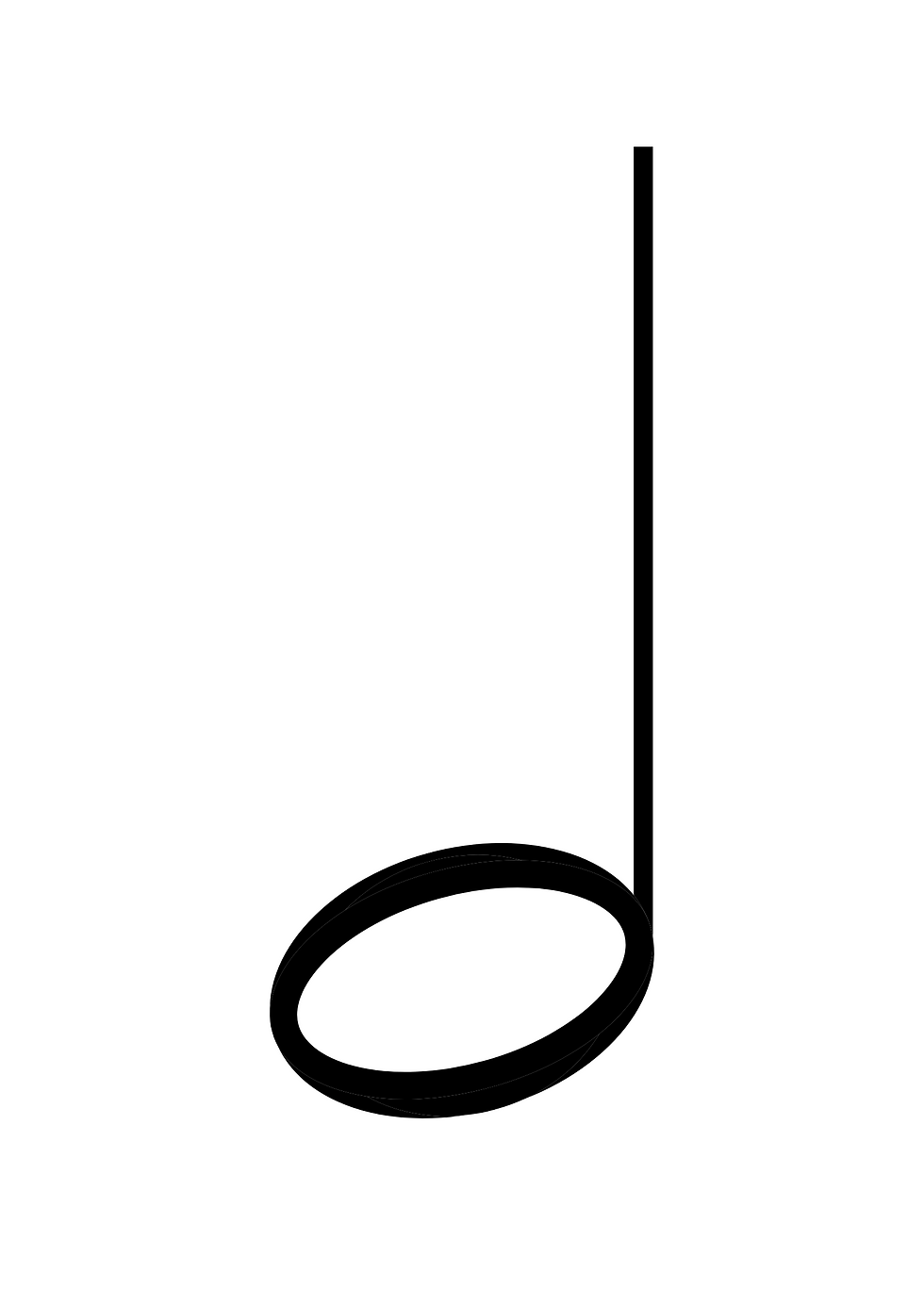
Two-beat notes are called 'minims'. They look like crotchets, but with the middle of the note head 'hollowed out'. That makes them longer.

Semibreves are four beats. They're hollow again, but this time they've also lost the tail.
Tails and Dots - Halving and adding halves
Tails - Halving

A half beat is called a 'quaver'. You'll notice pretty quickly that it has a little tail.
To halve it in length again, you add a second tail, like this:

That's a quarter beat, or 'semiquaver'. Neat, isn't it?
Want to halve it in length again to an eighth of a beat? Add another tail.
You can remember that tails halve quavers and their friends because they look like the slash of a sword!
Dots - Adding halves
While tails halve notes in length, adding a dot after the note will add another half the value onto the end of the note.

A minim is two beats, half of two is one, so a dotted minim will be three beats.
You can also make a dotted crotchet for one-and-a-half beats:

Dotted minims and dotted crotchets are the most common of the dotted notes - others are possible, but are less common and usually only used for more complex rhythms.
So there we have it! Those are some of the most basic music note shapes you'll come across throughout Western music.
Want an easy-reference resource to remember which is which? Sign up to our mailing list to download our Cheat Sheet below!


Comments